Learn why at-home dental care is essential for your dog's oral health, what products to use, and practical tips to build and maintain a consistent dental care routine.

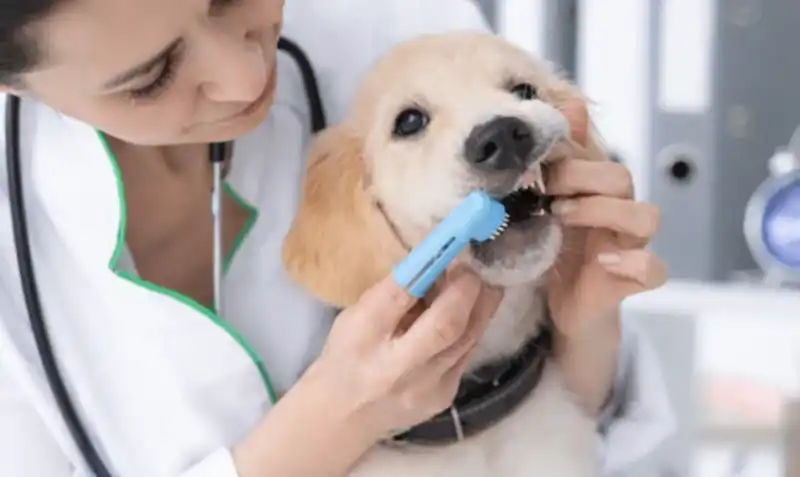
Our days are filled with small habits, from brushing our teeth every morning to feeding the dog before work. These things are so ingrained that we do them on autopilot without even thinking, but they didn't start out that way. As a veterinarian, I consistently recommend at-home dental care as the most effective way for pet owners to promote their dog's oral health, slow the progression of common dental diseases, and reduce the need for costly dental procedures. Let's explore why at-home dental care is so important for your dog's health, what it may involve, and how you can start and actually stick to a consistent dental home-care routine.
Per the American Veterinary Medical Association (AVMA), dental disease affects up to 80% of dogs by age three. Dental conditions in dogs include fractured teeth, malocclusion (abnormal bite), retained deciduous teeth, oral growths or masses, and more. Yet the most common dental problem in dogs is periodontal disease, and understanding how it develops helps explain why daily home care matters so much.
Periodontal disease is an inflammatory condition of the tissues that hold the teeth in place. It starts when bacteria form a sticky film on the teeth, called plaque, which then interacts with your dog's saliva to mineralize into hard calculus (tartar). Once formed, calculus can only be removed with a veterinary cleaning under anesthesia. Early on, it causes gingivitis, characterized by red, inflamed gums that may bleed. If inflammation persists, it can progress to periodontitis, causing loss of bone that supports the teeth, gum recession, pain, infection, tooth loss, and even systemic effects on major organs such as the heart and kidneys.
Signs of periodontal disease may include bad breath, tartar buildup, red or bleeding gums, drooling, pawing at the mouth, and difficulty eating or chewing. Because dogs may not show signs of pain and disease can lurk below the gumline, some pet owners will not notice any symptoms even if periodontal disease is present. This is one reason why dental disease is often overlooked. The good news is that periodontal disease is considered preventable with a combination of at-home dental care and routine dental cleanings by your vet.
It's important to understand that even the best at-home dental care is not a replacement for veterinary dental cleanings. These procedures are performed under anesthesia and are critical in allowing your vet to fully examine the mouth, probe for periodontal pockets, take dental X-rays, and ultimately treat dental disease above and below the gumline.
Veterinary organizations, including the AVMA and the Veterinary Oral Health Council (VOHC), agree that daily brushing is the single most effective way for pet owners to support dental health between cleanings. The mechanical act of brushing removes plaque from the tooth surface and at the gumline, before it can harden into tartar. Dog-safe toothpaste also contains enzymatic or anti-plaque ingredients to help slow bacterial growth and reduce odor. It is designed to be swallowed safely, and often comes in pet-friendly flavors that help make brushing easier. Because plaque begins to mineralize quickly (often within about 24 hours), brushing is most effective when it's done daily.
The Veterinary Oral Health Council (VOHC) is an organization that evaluates pet dental products. When a product carries the VOHC Seal of Acceptance, it means the manufacturer has submitted controlled study data showing safe and effective plaque and/or tartar control. These products are intended to complement toothbrushing and can help reduce plaque and tartar through several different mechanisms, such as mechanical abrasion, chemical plaque control, antimicrobial effects, and reducing how easily plaque sticks to teeth.
Dental diets - Unlike regular kibble, dental diets typically use a larger kibble size and specific texture that allows for a scraping action along the tooth surface as a dog chews. These diets also contain ingredients intended to reduce oral bacteria and slow plaque buildup. Using a dental diet is as simple as feeding your dog, but they require a prescription, tend to be costly, and may not be appropriate for dogs who require a different therapeutic diet or do not like kibble.
Dental chews - Dental chews are a convenient way to support oral health through mechanical abrasion, along with chemical ingredients aimed at reducing plaque and tartar buildup. They're often easy for owners to use and can be a tasty treat for dogs who enjoy chewing. For safety, chews should be appropriately sized, not overly hard, and used under supervision.
Water additives - Water additives are liquids you simply add to your dog's water bowl to help reduce oral bacteria and slow plaque buildup. In multi-pet homes (especially when dogs and cats share a water source), you'll want to choose a product that's safe for all animals and be sure to provide additional bowls of plain water as well. If an animal dislikes the taste of the water additive, it may discourage them from drinking.
Gels, wipes, sprays, and powders - These products can be useful for dogs who won't tolerate a toothbrush, because they allow some level of plaque control with less handling of the mouth. They work in various ways, including mechanical disruption of plaque, enzymatic breakdown of plaque and odor-causing bacteria, and supporting a healthy oral environment. While they may be easier to use, they are still less effective than brushing.
Anesthesia-free dental cleanings may improve the appearance of the teeth above the gumline, but they do not allow for a thorough exam, dental X-rays, or cleaning below the gums, and using sharp dental tools in an awake animal can be dangerous for all parties involved. Very hard chews such as antlers, bones, or certain nylon products can increase the risk of painful tooth fractures and should be avoided. Lastly, never use human dental products or toothpastes, as they often contain ingredients that are unsafe for pets.
Dental disease is extremely common in dogs and can affect their overall health, longevity, and quality of life. Veterinarians consider at-home dental care the most effective way for pet owners to promote oral health in between vet visits. A consistent routine is important to help disrupt plaque formation and prevent it from hardening into tartar, which is much more difficult to remove.
First, consider your schedule, preferences, type and number of animals in your home, and your dog's age and temperament. The best routine will be one that you actually stick to, and setting realistic goals can help accomplish this. To be most effective, brushing should be done daily, but if you're just starting out, it's okay to aim for a minimum of 3-4 times per week. Anything less than that is unlikely to be effective, and it may be best to focus on other dental care options. Ask your vet for personalized guidance or refer to the sample routine below.
Pick a consistent time and place (e.g., after breakfast in the living room). Use a dog toothbrush or finger brush with dog-safe toothpaste. Brush the outer surfaces of the teeth along the gumline in gentle circles, then give an immediate reward (treat/play/praise). Do this daily if possible, or at least 3-4 times per week. If brushing isn't possible yet, or in addition to brushing, use VOHC-approved dental products as directed on the label or by your vet.
The goal is to establish a routine that you can consistently and easily perform, ideally for the duration of your pet's life. To do this, you must take your time to introduce dental care to your pet so that they not only tolerate it but actually come to expect and enjoy it. Break toothbrushing into small, gradual steps and pair each with a high-value reward, allowing your dog to build comfort and positive experiences over time. For example, begin by getting your dog comfortable with you touching around their mouth, then sliding a gauze-covered finger between their lips and teeth, eventually working up to brushing the outer surface of the teeth in gentle circles. If at any time your dog seems stressed or you are concerned about your safety, stop and get support from your vet.
Daily toothbrushing, along with products approved by the VOHC, is the cornerstone of evidence-based home dental care. These products range from water additives and dental diets to chews, toothpastes, and powders, and are evaluated for safety and efficacy.
Habit pairing, or stacking, is a strategy in which you attach a new habit (such as brushing your dog's teeth) to something that you already do every day. It takes less effort and motivation to remember a new habit when it is linked to a consistent cue, such as brushing your own teeth or feeding the dog breakfast. Over time, the new habit will become automatic, making dental care feel like just another part of daily life.
Many people have heard that it takes 21 days to form a habit, but research suggests it's usually longer and more variable. In one study, participants took anywhere from 18 to 254 days for a new daily behavior to feel automatic, averaging around 66 days. Make your dental routine easy enough to repeat consistently until it becomes part of daily life. If you perform the dental care routine at the same time and in the same place every day, your dog will also come to expect (and possibly even look forward to) it.
Another strategy that can help new routines stick is using a habit tracker or a simple reward system. Tracking helps make progress visible, which can be motivating. This might be as simple as checking off days on a calendar, using a notes app, or using a dedicated tool such as PerkyPet, which helps pet owners track dental care and other home health habits in one place.
Just as with brushing your own teeth, daily brushing is the gold standard for at-home dental care for dogs. But the best dental care routine for your dog will be the one that fits easily into your lifestyle and budget, is well tolerated by your dog, and is something that you can stick to consistently. By committing to a realistic at-home dental care routine today, you can become an active partner in protecting your dog's dental health. Small daily actions can help prevent pain, preserve teeth, and improve your dog's comfort and quality of life for years to come.